Accessible Skies is focused on enhancing accessibility and support for people with cognitive disabilities, their care partners, and their families in the airport experience.
click to read more Resource Type: Organization
User Group: - Brain Injury Survivor
- Caregiver
Stroke leads to complex chronic structural and functional brain changes that specifically affect motor outcomes. The brain predicted age difference (PAD) has emerged as a sensitive biomarker of both sensorimotor
click to read more Resource Type: Research Paper
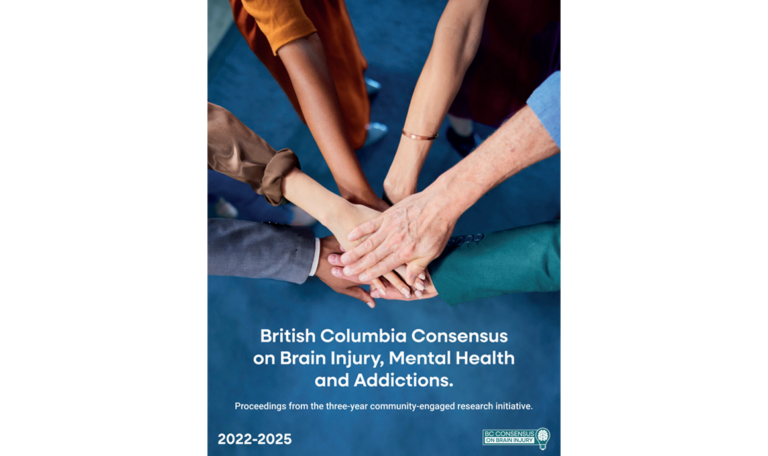
Co-led by Janelle Breese Biagioni (CGB Centre for Traumatic Life Losses) and Mauricio Garcia-Barrera (University of Victoria), the British Columbia Consensus for Brain Injury, Mental Health and Addiction project was
click to read more Resource Type: Research Paper
User Group: - Brain Injury Survivor
- Caregiver
- Professional
The prevalence of acquired brain injury (ABI) and mental health/substance use (MHSU) disorders is high amongst people experiencing homelessness, yet guidance for addressing these complex comorbidities is lacking. Therefore, the
click to read more Resource Type: Research Paper
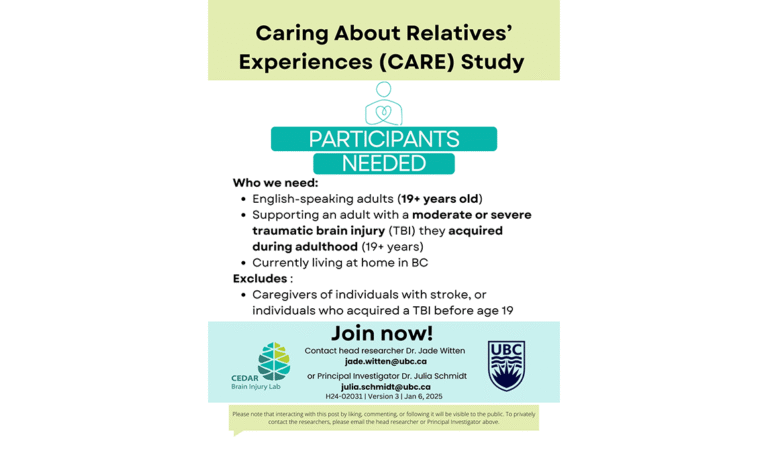
Who we need: English-speaking adults (19+ years old) Supporting an adult with a moderate or severe traumatic brain injury (TBI) they acquired during adulthood (19+ years) Currently living at home
click to read more
For over two decades, the Concussion in Sport Group has held meetings and developed five international statements on concussion in sport. This 6th statement summarises the processes and outcomes of
click to read more Resource Type: Research Paper
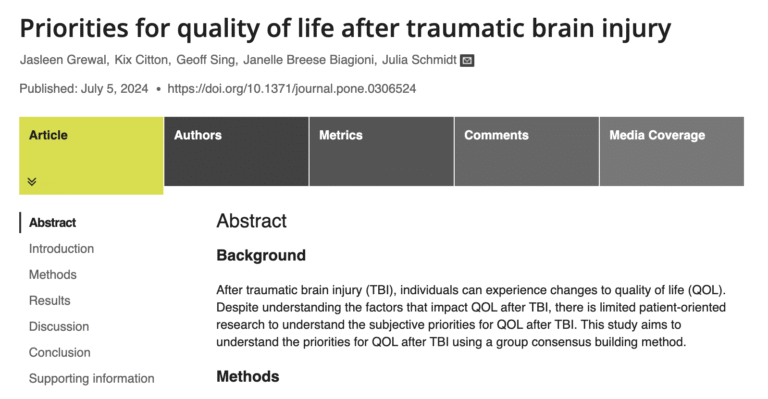
After traumatic brain injury (TBI), individuals can experience changes to quality of life (QOL). Despite understanding the factors that impact QOL after TBI, there is limited patient-oriented research to understand
click to read more
Abstract Post-traumatic headache (PTH) is prevalent following concussion, yet few evidence-based treatments exist. Intranasal lidocaine (INL) may help treat migraine; however, it has not been studied specifically for PTH in
click to read more Resource Type: Research Paper
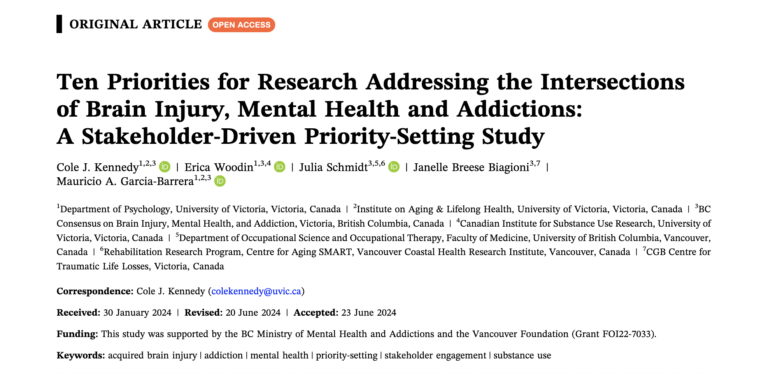
The purpose of this study was to engage key stakeholders in a health research priority-setting process to identify, prioritize and produce a community-driven list of research questions addressing intersectional issues
click to read more
The purpose of this study was to engage key stakeholders in a health research priority-setting process to identify, prioritize and produce a community-driven list of research questions addressing intersectional issues
click to read more
This paper sought to determine the lifetime prevalence of traumatic brain injury and its association with current health conditions in a representative sample of homeless people in Toronto, Ontario.
click to read more Resource Type: Research Paper
Objective To assess disparities in both individual and neighborhood measures of opportunity across multiple critical junctures in the health care system journey of pediatric head trauma patients. Study design Using
click to read more Resource Type: Research Paper
People with acquired brain injury (ABI) may experience concurrent conditions such as, mental health and substance use concerns, that require specialized care. There are services that aim to support people
click to read more Resource Type: Research Paper