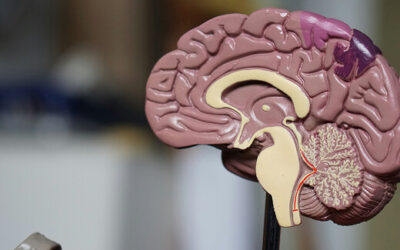
For the longest time, I’d thought of the events below in terms of the crash itself. And to be sure there was a lot to think about; a series of life-threatening injuries which had the potential, in the very early days, of leaving me blind, with permanent brain damage, or in the worst case, dead. While those things thankfully didn’t come to pass, I’ve come to realize that most of the time recovering has really been about the acquired Traumatic Brain Injury (TBI) I sustained.
I am not a particularly pedantic person, but I avoid the word accident when referring to the crash that nearly took my life. To me, that makes it sound like it was just bad luck. I maintain that had the driver been paying attention to his surroundings enough to be operating a motor vehicle, he would have seen me and it never would have happened.
Crash
I went out for a bit of a joyride on the afternoon of Sunday, April 14th, 2024. I planned to be out for an hour or two at most. Beyond that it was a pretty unremarkable day – clear and cool for spring in Vancouver.
I was heading east on Rumble Street in southwest Burnaby, when a driver heading west turned left across my path. As he did so, he hit me at roughly 50km/hr, which was fast enough to throw me into the windshield, and up over the roof of the car, landing on the pavement about ten feet behind it. I remember the car coming to a stop diagonally, pointing away from me. I also remember everything slowing down in the split-second of the crash. As the driver took my bike out from under me and I flew into the windshield, it was like an out-of-body experience. The crunch of my body hitting glass, the thud of it collapsing on the pavement.
The only thing I can recall from the aftermath of the impact is the driver exclaiming repeatedly that he never saw me – on an absolutely clear day with excellent visibility (much like the day in the photos above). And before anyone assumes anything, I was wearing a white helmet, and dressed in a very visible bright red cycling jersey. I vaguely remember the paramedics cutting off my cycling kit, but everything else until days later in the hospital is a blur. There are moments in the days following that seem like delusion or fever dream, though I do remember once being taken to St. Paul’s downtown when they were planning a procedure they didn’t end up doing.
Somehow, I managed to provide my wife’s cell number to a bystander, who called, and followed that up with a text message when she couldn’t reach my wife. In a strange turn of events, the bystander texted contact info for the driver. Thinking he was a witness, my wife sent him a text asking what he saw, to which he responded that he was actually the driver who hit me.
To this day I remain somewhat incredulous that he didn’t suffer so much as a reprimand for nearly ending me. Some weeks after the crash, when I finally gave a statement to the constable assigned to my case, she informed us that charging the driver would be up to us … as if we had a clue what he could even be charged with. The police were also ultimately no help providing a copy of the police file from the crash, to help us determine if distracted driving may have been the cause, as we suspect.
Injuries
Polytrauma is a medical term used to describe a patient with multiple traumatic injuries to different body regions or organ systems, where at least one of those injuries, or the combination of them, is life-threatening.
When I arrived at Royal Columbian Emergency I had a lot of internal and external bleeding. The most obvious injuries were a massive laceration just below my left elbow and additional lacerations at my outer left knee and on my outer left thigh. I have scars from all of them, but the real souvenir is about five inches long, extending down my left forearm. It is the invisible damage, though, that has dominated my life in the time since. Somewhat miraculously, aside from the knee and thigh cuts, I sustained no lower body injuries.
Once they finished stitching up my external wounds, I had become non-responsive, indicating that I’d probably had one or more strokes. When imaging confirmed it, the neurologist recommended they put a stent in my right carotid artery to reduce the risk of clots, further strokes and debilitating brain injuries. With the main concern being potential permanent brain damage, my time in emergency surgery was fraught with stress for my family. It didn’t help that my platelet count was over five thousand at this time, when “normal” is four hundred or so.
I returned to general surgery from emergency surgery with my bowels in my chest cavity, a ruptured diaphragm, and my spleen an unsalvageable mess. The emergency surgery was entirely about saving my life, while the general surgery was mostly about fixing the mess in my abdomen.
I have no idea how many exactly, but I also broke several ribs and they ended up the least of my concerns, as I barely noticed them during my trauma unit stay. The heavy pain medication I was on may have had something to do with that.
It’s probably worth mentioning at this point that I was also intubated for breathing, and had chest and stomach tubes to drain blood. As well, I had a feeding tube to get calories into me during the first part of my time in the trauma unit, had a catheter for voiding my bladder, and had a PICC line throughout my trauma unit stay so the multiple needles I got were easier to handle. In addition to the scars I’ve already mentioned, I’ve got one of roughly a foot in length running down my abdomen, another that meets that one perpendicular to it (where they removed my spleen), and a little 2″ one on my ribs, from my chest drainage tube. I wish my wife had taken a photo of me, because apparently I looked like a member of the Borg Collective from Star Trek.
In the hospital trauma ward in the days following the crash, I had significant visual deficits, and there was some talk in the first couple days of me losing my sight. Most notably I had a condition called left side neglect, where those afflicted tend to ignore a lot of things on the left side of their field of vision, usually when a stroke has affected their right side. This improved fairly quickly, and by the time of my August ophthalmology follow-up, I had actually been cleared to drive again, but some of my early vision tests were pretty scary, and I still have some visual issues two years later.
Recovery
I spent three weeks in the Royal Columbian Hospital trauma unit, before being transferred for another five to GF Strong, a rehab hospital that specializes in Spinal Cord and Traumatic Brain Injuries.
By far the strokes and TBI have had the largest impact on my life. There isn’t an area I can think of which hasn’t been affected, often significantly. As the strokes affected my right side, my right hand was near-useless upon my release from hospital.
I did five weeks each of physio, occupational, and speech therapy during my GF Strong stay, and was released home mid-June. I mostly rested for the next couple months to get strong enough for more intense community physio, though I began three months of hand therapy immediately. I had frequent insurance calls and medical follow-up meetings during this time as well. In July 2024, I began my community therapy journey.
My right hand has thankfully shown decent improvement over time. I needed to re-learn to use it, but being right-handed, I also used it for everything throughout my recovery, even when it was uncooperative in the extreme in the early days. I spilled relentlessly, broke a few things, and was generally a shaky mess. The hand therapy, and pure stubbornness, were a big help in getting it back on track. Being a drummer also proved beneficial, as near-daily playing for well over the first year turned out to be excellent hand therapy. General right hand use is now largely indistinguishable from before the crash, but fine motor skills and dexterity still elude me to some degree. Typing is now decent but noticeably slower than before. Printing is slower than typing still, but I persevere with practice, focusing on legibility over speed.
The other area where limb coordination was a significant problem was running, and to a lesser degree, walking. I have suffered more than a few bloody knees en route to becoming more stable on my feet. On some of my overnight stays at home while still at GF Strong, I was lucky if I could wobble through 2 km at a slow jog, tipping and tripping due to dizziness and balance issues. I recall phoning my wife for a rescue pickup with blood streaming down my legs on more than one occasion. One time when walking to the car from a medical appointment, I tripped on some uneven pavement, did a somersault and hurt my shoulder. This was obviously a big departure from the 3:07 marathoner I had been several years before the crash.
In July 2024 I began six months of vestibular physiotherapy and, in September 2024, six months of cognitive speech therapy. Balance and dizziness issues are exceedingly common amongst TBI sufferers, and I’ve been no exception. I have never had exceptional balance, but I became a tipsy machine after the crash, a fact to which the examples above will attest.
Back in the early days in the trauma unit, my wife says I was limited to one-word responses and most often stared into space. By the time I was transferred to GF Strong after three weeks, I no longer spaced out, but still had problems with things like labelling, categorization and word finding, often stumbling for terms that came easily to me before the crash.
To give you an idea of where my brain was at in those early trauma unit days, one time when they asked what I remembered of the crash, I was able to tell them details about my bike, but, when they asked who was in the room with me, I had no idea who my youngest son was. We’ve had a few good chuckles about that in the time since, but it was probably a little unnerving in the moment.
When first released from hospital, I constantly forgot where I put things and misremembered even the most basic details of almost everything. I suffered from persistent brain fog, something very common to people with a TBI. I couldn’t read well or parse the hands on a clock face, and I became confused easily.
To aid my short-term memory, I developed the habit of keeping all the stuff I use daily in the same backpack by the door. I also got in the habit of putting absolutely everything in my calendar. I had a lot of appointments, particularly with insurers, healthcare practitioners, and therapists. These deficits have improved a great deal during my recovery, and are returning pretty close to baseline, though I know I still have occasional brain fog and TBI “moments.”
Long term memories have, thankfully, remained fully intact. Not remembering our recent Australian or Europe trips would have been truly depressing.
I credit the six months of cognitive speech therapy for helping memory and cognition immensely. My Speech-Language Pathologist (SLP) helped me develop strategies for working around my cognitive deficits and we worked extensively on memory and recall. In the last part of my cognitive speech therapy, we began doing return-to-work planning and exercises, and I’d even received a 100% remote medical accommodation due to my newly immunocompromised status. However, a combination of higher education financial troubles, an offer of nearly a year’s salary, and some institutional inertia in putting my graduated return to work plan into effect, meant I ultimately accepted an early retirement offer.
I have been very happy with my running and cycling progress throughout my recovery. When I first got out of hospital I wondered if my running days were behind me, and while progress has been slow to be sure, the wobbly 2k slow jogs have morphed into decently paced 18k runs, as of spring 2026. As for cycling, which started with very short rides on protected infrastructure around home, I’m now up to 80k on the open road, and decent trainer workouts. I haven’t needed to place a rescue call with my wife while cycling, though my Garmin incident alert did give her a scare when I failed to negotiate a curb properly and gave myself a good patch of road rash. Being able to run, cycle, type and read again were actually the only goals I set for myself when I began therapy at GF Strong. A near-daily reading habit since the crash has seen a return to very near pre-crash reading comprehension and speed. As such, I have met or exceeded all the major goals I had for my recovery when I began my therapies in GF Strong in May 2024.
Remains
I’ve made good progress. My family and friends are shocked at how my recovery has progressed. To look at me, there are no outward signs of what I’ve been through, but it’s nowhere near all positive.
As a result of losing my spleen, I have become immunocompromised, have to be more cautious in crowded places, and have developed a sizable incisional hernia, for which I FINALLY got a surgery date of April 14, 2026, two years to the day from the crash that ultimately caused it. I also had five new vaccines as a result, with two of them requiring multiple doses, and boosters in 2029.
In general, as you might guess after dealing with so much physical trauma, I have more pain, bordering on chronic in some cases. I experience a lot of tightness in some of the muscles in my back and shoulders, and my abdomen feels odd all the time, as the sensation of a six centimetre hole with my transverse colon protruding (and risk of strangulation) affects everything I do. A sizable area in my left pectoral muscle, and under my left arm has also permanently lost sensation, and the hernia repair will carry the risk of further nerve damage.
Light sensitivity has been a constant struggle, and remains so to this day. I wear sunglasses all the time when I’m outside, aside from a very small comfort zone where daylight doesn’t force me to. Overcast gloom is now, sadly, my friend.
I still have occasional episodes of brain fog and TBI moments. I used to be a very linear, logical person, and my thinking is often more jumbled now. My ability to do reasonably complex math on the fly is also gone. Even now, well over two years after the event, there are times when I fight to recall something I did recently, randomly lose my train of thought, or struggle with relatively simple concepts.
I am also not likely to ever again have the executive functioning capabilities I had before the crash, with things like planning and task tracking affected. Given that my job as a digital design lead depended entirely on these abilities, and more creative ones, initially I questioned whether I’d have been able to work again. Ultimately it wouldn’t end up mattering.