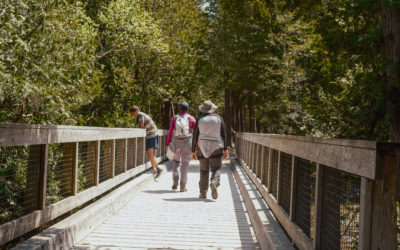
There’s the ever so subtle shade of auburn dusting across my garden hedge, a deepening red blush on the apples in the orchard too. From my couch by the window, I catch the aroma of crops being harvested from the fields nearby. I watch a squirrel darting across my yard...

Lauren M
Participants Needed for Research Survey to Help Make Canadian Airports More Accessible
The Accessible Skies project is focused on enhancing accessibility and support for people with cognitive disabilities, their care partners, and their families in the airport experienceThey are currently gathering feedback from people with cognitive disabilities and...
Polytrauma by James Wanless
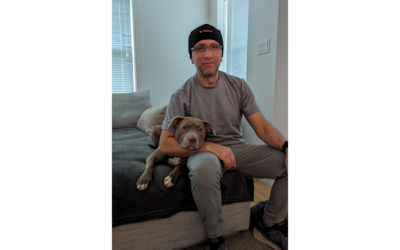
I went out for a bit of a joyride on the afternoon of Sunday, April 14th, 2024. I planned to be out for an hour or two at most. Beyond that it was a pretty unremarkable day – clear and cool for spring in Vancouver.
I was heading east on Rumble Street in southwest Burnaby, when a driver heading west turned left across my path. As he did so, he hit me at roughly 50km/hr, which was fast enough to throw me into the windshield, and up over the roof of the car, landing on the pavement about ten feet behind it.
I remember the car coming to a stop diagonally, pointing away from me. I also remember everything slowing down in the split-second of the crash. As the driver took my bike out from under me and I flew into the windshield, it was like an out-of-body experience. The crunch of my body hitting glass, the thud of it collapsing on the pavement.
How Age May Shape Recovery After Brain Injury
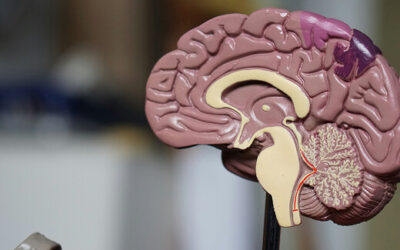
We often hear that younger brains recover better after a brain injury because they are more adaptable. But new research suggests that age may affect recovery in more complicated ways. A study published in Experimental Neurology looked at how younger and older mice...
New Online Course Helps IPV Responders Recognize and Respond to Brain Injury
Brain injury is far more common in situations of intimate partner violence than most people realize. Around 230,000 women in Canada experience severe physical violence from a partner every year, and as many as 92% report blows to the head and face. Yet these injuries...
E-Scooter Injuries: What New Research Tells Us About Brain Injury Risk
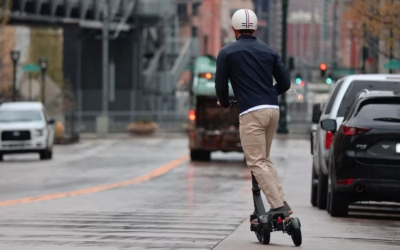
Electric scooters (e-scooters) have become an increasingly common way to get around cities. They can be convenient, affordable and an alternative to driving for shorter trips. But as their use grows, so does the need to understand the potential for serious injury. A...
Study Identifies Potential Areas of Focus for Enhanced Motor Recovery After Stroke
A new study published in The Lancet Digital Health is providing further insight into how the brain changes following stroke and how these changes may be related to motor recovery. Researchers examined brain scans from 501 people with chronic unilateral stroke, using...
Funding Opportunity: Disability Alliance BC Accessibility Projects Grants 2026/2027
BC-based not-for-profit organizations looking to improve accessibility and inclusion in their communities may be eligible for up to $40,000 through Disability Alliance BC’s (DABC) Accessibility Projects Grants. Applications are now open for the 2026/2027 Accessibility...
Understanding Invisible Brain Injury: When Someone Looks Fine but Isn’t
When people think of a brain injury, they often imagine visible signs such as a wheelchair, bandages, or difficulty walking. However, many people living with an acquired brain injury (ABI) experience challenges that cannot be seen from the outside. This is why brain...
Bridging Community Care and National Policy: A Conversation with Janelle Breese Biagioni
What makes meaningful change possible? Listening to the people who live it every day. The Mind & Brain Student Network BC recently interviewed Janelle Breese Biagioni, Chief Executive Officer of the CGB Centre, about how lived experience, collaboration, and...
Double Date by Debra Erickson
I still keep an actual calendar hanging on my kitchen wall. Each month displays a photograph of a vintage Volkswagen Van (circa: 1970 – 1974). I collect old VW’s in any way, shape or form. Call it superstition,...
Support a National Strategy on Brain Injury: Advocacy Resources Now Available
Brain Injury Canada has created advocacy resources to help individuals and organizations contact their Member of Parliament (MP) and show their support for Bill C-206: An Act to establish a National Strategy on Brain Injuries. Whether you're living with a brain...
SUMMER S.A.D. by Debra Erickson
It’s official: summertime in Canada. It was a warm, busy weekend, soccer tournaments, yard work and Canada Day celebrations squeezed into the mix as well. Our relatives in Sweden sent greetings on June 21....
More Than Tired: Understanding Fatigue After an Acquired Brain Injury
Feeling tired after a busy day is something everyone experiences. Usually, a good night's sleep or taking a break is enough to help us recover. After an acquired brain injury (ABI), however, fatigue can be very different. Often described as pathological fatigue, this...
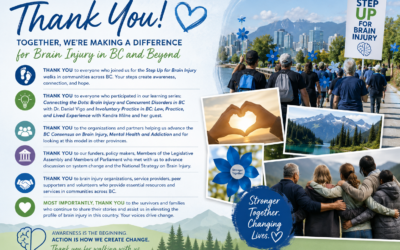
Thank You for Walking With Us This Brain Injury Awareness Month
June has been a powerful month for the brain injury community across Canada. As Brain Injury Awareness Month comes to a close, we want to take a moment to simply say thank you. Thank you to everyone who stepped up and joined us for the Step Up for Brain...